Fleet Telematics for Mining Operations in Australia
A complete guide for mining operators — from hardware selection to ROI.
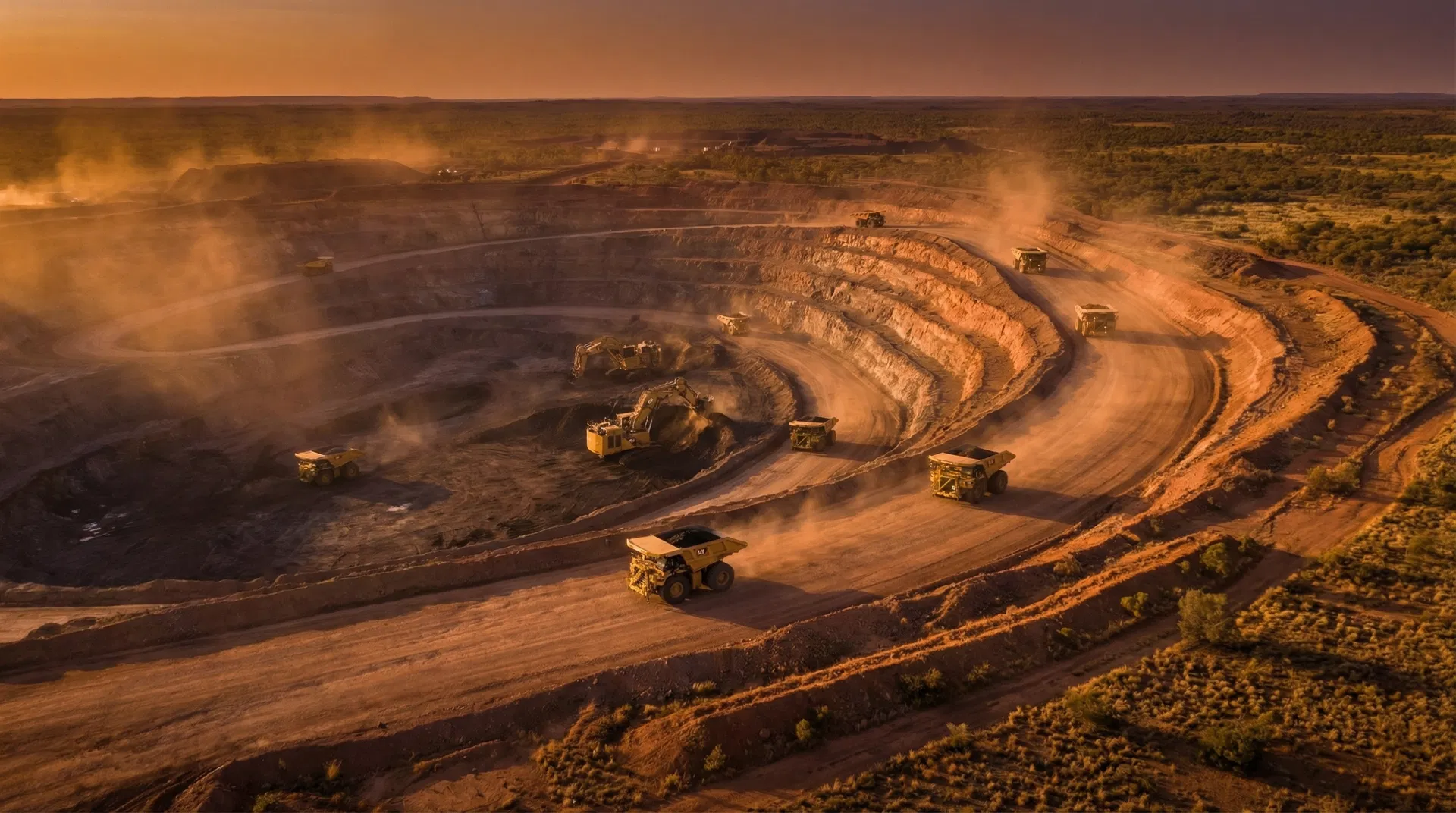
Australian mining operations run some of the most complex and expensive heavy machinery fleets in the world. A single unplanned breakdown on a production shift can cost $50,000–$200,000 in lost output. Fuel is often the second-largest operating cost after labour. And with mixed-brand fleets — Cat, Komatsu, Hitachi, Volvo, Liebherr — managing maintenance and utilisation across multiple OEM portals is a daily operational burden.
Fleet telematics addresses all of these challenges. This guide covers everything you need to know about implementing telematics in an Australian mining operation — from hardware selection to ROI.
The Mining Telematics Challenge
Mining fleet management has unique requirements that generic fleet telematics platforms don't address well:
- →Remote site connectivity — mine sites in the Pilbara, Bowen Basin, and Goldfields often have poor or no mobile coverage
- →Mixed-brand fleets — most mining contractors run Cat, Komatsu, Hitachi, and Volvo side by side
- →Heavy-duty hardware requirements — devices must withstand vibration, dust, extreme heat, and 24/7 operation
- →Compliance requirements — WHS regulations require accurate records of machine hours, inspections, and maintenance
- →Production reporting — mine sites need utilisation data by shift, not just daily summaries
Hardware Selection for Mining
Not all telematics hardware is suitable for mining environments. Here's what to look for:
Connectivity
Remote mine sites require multi-carrier SIM technology — devices that automatically switch between Telstra, Optus, and Vodafone networks to maintain connectivity. For sites with no mobile coverage, satellite backup (Iridium or Globalstar) is essential.
Pacific Fleet Systems uses the Teltonika FMC650 for heavy mining applications — a device with multi-carrier SIM, satellite backup, and an IP67-rated enclosure rated for extreme environments.
CAN Bus Protocol Support
Mining equipment uses J1939 (the heavy-duty vehicle CAN bus standard) and manufacturer-specific proprietary protocols. Your telematics hardware must support both. The FMC650 supports CAN bus (J1939 + OBDII), RS232, RS485, and 1-Wire — covering all major mining equipment brands.
Durability
Mining environments are harsh. Devices must be rated for operating temperatures of -40°C to +85°C, IP67 dust and water ingress protection, and vibration resistance to ISO 16750-3 standards. Consumer-grade GPS trackers will fail within weeks in a mining environment.
OEM Integration vs Independent Telematics
Most major OEMs offer their own telematics platforms — Cat's VisionLink, Komatsu's KOMTRAX, Hitachi's ConSite. These platforms provide excellent data for their own brand of equipment. But for a mixed-brand fleet, they create a fragmented picture: you need to log into three or four different portals every morning to get a complete view of your fleet.
Independent telematics platforms like Pacific Fleet Systems aggregate data from all machine brands into a single dashboard. You get one login, one report format, and one view of your entire fleet — regardless of brand.
This doesn't mean abandoning OEM platforms entirely. For warranty claims and OEM service support, you may still need access to VisionLink or KOMTRAX. But for day-to-day fleet management — utilisation, maintenance scheduling, fuel reporting — an independent platform that covers your whole fleet is significantly more efficient.
Key Use Cases for Mining Telematics
1. Production Shift Reporting
Mine sites need to know productive hours by machine and by shift — not just daily totals. CAN bus telematics provides engine hours, load factor, and idle time by shift, giving production managers the data to optimise machine utilisation and identify underperforming assets.
2. Fuel Management
Fuel is typically the second-largest operating cost in mining after labour. CAN bus telematics provides actual fuel consumption data from the ECU — not estimates. This data enables fuel reconciliation (comparing fuel issued vs fuel consumed), identification of high-consumption machines, and idle time reduction programmes.
3. Maintenance Scheduling
Service scheduling based on actual engine hours — not calendar time — prevents both over-servicing and missed services. Automatic service alerts when machines approach their service interval give your workshop team time to plan and schedule maintenance without disrupting production.
4. Fault Code Management
Instant fault code alerts — sent to the operator, supervisor, and maintenance team simultaneously — enable rapid response before a fault becomes a breakdown. For high-value assets like 300-tonne haul trucks, early fault detection can prevent catastrophic failures costing millions in repairs and lost production.
5. Compliance and Reporting
WHS regulations require accurate records of machine inspections, maintenance, and hours. Telematics provides an auditable, tamper-proof record of machine hours and maintenance history — reducing the administrative burden of compliance reporting and providing documentation in the event of an incident investigation.
ROI for Mining Operations
The ROI from fleet telematics in mining is typically driven by three factors:
From idle time reduction and fuel reconciliation on a 20-machine fleet.
From planned vs reactive maintenance and early fault detection.
From identifying underutilised assets and optimising scheduling.
For most mining operations, the annual ROI from fleet telematics is 5–15x the cost of the subscription — making it one of the highest-return technology investments available to mining contractors and operators.
Getting Started
The fastest way to evaluate fleet telematics for your mining operation is a pilot programme — typically 5–10 machines for 30–60 days. This gives you real data from your own fleet to calculate ROI before committing to a full deployment.
Pacific Fleet Systems offers a no-obligation pilot for mining operators in Australia. Contact us to discuss your fleet size, asset types, and site locations — we'll recommend the right hardware and connectivity solution for your operation.
Get Started
See it working on your fleet.
Book a 15-minute demo. No commitment, no sales pressure — just live data from your asset types.